

Our Story
1888-1983

Miss J V L Brown, MBE
Of all the Browns, Jessie should best remembered in Yateley, for it was she who founded Yateley Textile Printer, now the widely known Yateley Industries for the Disabled Ltd. The only daughter in this large family, she has been described as "outstandingly pretty, with tremendous vitality and a strong sense of fun and also a talented artist". She first trained as a watercolourist at Oxford and then attended the Slade School of Fine Art in London in its heyday before the first World War.
In 1910 she began training as a nurse at the new open-air hospital for crippled children in Baschurch, Shropshire, under the founders Dr Robert Jones and Nurse (later Dame) Agnes Hunt. Here she learnt the new practices in orthopaedic nursing, becoming the country's first orthopaedic aftercare sister.
1914
Nurse In First World War
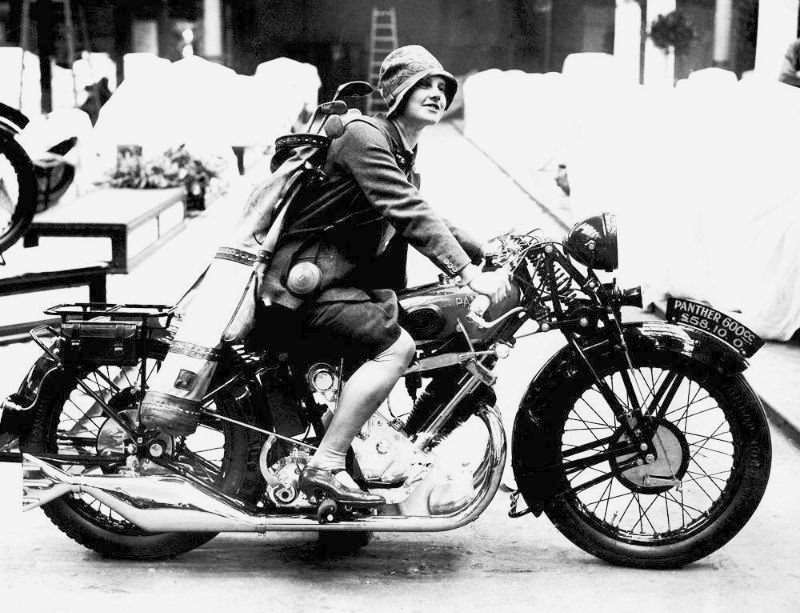
In the First World War Jessie went to nurse the sick and wounded soldiers in France, returning in 1917 to Baschurch where she was put in charge of several of the new aftercare clinics there. Her mode of travel in the 1920s was a motorbike on which she visited her patients and also dashed about the country persuading doctors to set up clinics for clubfeet. In 1923 she moved to Oxford to join the orthopaedic surgeon G. R. Girdlestone in establishing orthopaedic aftercare clinics there.
1923

Nurse To Princess In Nepal
In the same year, Sir Robert Jones received an urgent request from the British Residency in Katmandu for someone to advise on nursing Princess Nani, the five-year-old grand-daughter of the prime minister of Nepal, who had poliomyelitis. Jessie Brown was approached and within a week had left for Nepal where she spent the mornings on physio with her young patient and the afternoons painting the marvellous landscapes.
She remained on the staff of the Wingfield (later Nuffield) Hospital at Oxford, building up the clinics there but paid many visits to Nepal over the next ten years, and it was while there that she came across the local craft of hand block printing on fabrics. She carefully observed the technique, noting that it could be done with only one hand, and collected numerous traditional designs from Nepal, India, Persia, China, Egypt and Australia.
1935

Yateley Textile Printers
In 1934, Princess Nani died in an 8.4 magnitude earthquake that destroyed two thirds of Kathmandu. Jessie resigned from her post at Oxford and came home to Yateley to look after her mother - and to try out a new scheme for helping disabled adults. She enlisted the help of a young disabled friend, Grace Finch, whom she had nursed while suffering from polio - and the two experimented with hand block printing, such as Jessie had seen in Nepal.
In a garden shed and with a large tin bath as almost their only equipment, they taught themselves all the processes from mixing the dyes to cutting the wood blocks, to see if it might be a rewarding occupation for the physically disabled that would allow them to earn their livelihood and to live with some independence - like all other people. She felt sure that the beautiful and very varied designs would find a ready market.
By 1937 the project seemed promising enough for her to set up a small workshop in Moulsham Lane for eight disabled girls, with enthusiastic friends helping to raise the money required. She next persuaded an architect cousin to design their residential accommodation as well. “Yateley Textile Printers” was born and flourished until it had to close at the outbreak of the Second World War in 1939.
1939

Called-up Aged 56
In the early days of the war Jessie was living at Cricket Hill Cottage and warmly welcomed Canadian soldiers who were based at Cove. Later she started running YWCA canteens in Chichester and at Netley Hospital, her sister-in-law Mrs Llewyn Brown began working with her. Shortly before D-Day (6.6.1944) she was called up as a ward sister to work in a military hospital not far from Salisbury. She returned to Yateley in 1946. Cricket Hill Cottage had been left to her by her mother who died in 1941 and this she now sold to her brother, General Llewyn Brown, buying for herself a cottage called Woodhatch across the road.
1960s

Housing For The Elderly
So now Jessie turned to organising the building of retirement homes in Yateley for disabled adults. These were completed and managed by the Hanover Housing Association and are known as Hanover Close. Though other elderly people are eligible for the flats, some were reserved for retired employees of Yateley Industries and most had kitchens fitted with low-level worktops and doors that can accommodate a wheelchair.
At last, in her eighties, Jessie had one more project in mind. She sold her cottage in Cricket Hill Lane and bought a plot of land at Reepham in Norfolk where she set up a housing association to build cottages for the elderly. Again, her own specifications were incorporated: wide doors for wheelchairs, adjustable oven heights, raised flower beds and rockeries - she had always been an enthusiastic gardener - and they were to be laid out to allow easy conversation from one to another over the hedge. The complex came to be called the Reepham Experiment and it was such a success that similar cottage homes were built in both this country and in Canada.
Jessie intended to live in one of these cottages herself but while they were being built she accepted an invitation to spend a year with her niece, Claudia Russell-Brown, in Sydney. At the airport Claudia found her elderly aunt carrying one medium-sized suitcase and with no other luggage at all, saying this was all she possessed in the world.
Jessie was immensely energetic and successful in raising funds for disabled people but had no interest in money, possessions or renown for herself. Her paintings, much treasured by her relations, she never even troubled to sign. Her one regret in Sydney was that she no longer had her bicycle and when neighbours lent her their daughters garishly decorated one, she was truly delighted and rode out each day to do the household shopping.
Jessie spent a few years at Reepham but eventually had to go into a Home near Edenbridge where she died in April, 1983 aged 95, in the same year as her brothers Eric and Llewyn.
Present Day

A legacy to remember
Although the words we now use to describe disabled people have changed enormously, Jessies holistic vision for disabled adults to be able to Live, Work, Learn and Play with the right level of adjustment, remains as pioneering an idea now as it was in the 1930’s. Jessie was a visionary and although she was not materialistic or glory seeking, it is her vision and her belief in the resilience and potential of the human spirit that guides and inspires our work today.
We are indebted to her and are striving to continue to build on her legacy for the next generation and beyond.